
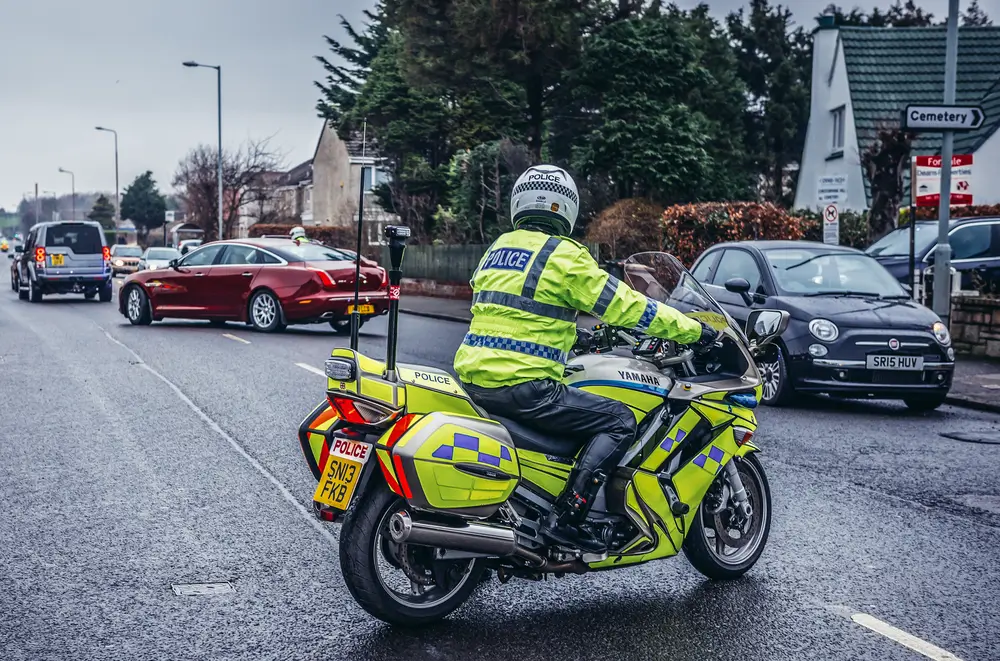
Searching for “scotland police jobs” turns up two very different things at once: police officer vacancies and civilian police staff posts. They sit inside the same organisation, share the same values, and lead to completely different application processes. Confusing the two is the quickest way to waste weeks.
This guide sets out what Police Scotland actually advertises, how the police staff selection process runs from application to vetting, and where the police officer route diverges. Everything here is attributed to Police Scotland’s own recruitment material or to dated vacancy snapshots, so you can see what is official and what is simply a time-bound advert.
Understanding Police Scotland jobs
Police Scotland is a single national service. It was established on 1 April 2013 and is responsible for policing across the whole of Scotland, some 28,168 square miles, covering a third of the UK’s landmass with urban, rural, island and remote communities.
The service is led by a Chief Constable and brings together police officers, police staff and special constables, supported by a command team of Deputy Chief Constables, Assistant Chief Constables and Directors. One employer overview describes around 23,000 officers and staff working together for the people of Scotland, which is useful as scale context rather than a live headcount.
Police Scotland’s stated purpose is to improve the safety and wellbeing of people, places and communities in Scotland, with a focus on Keeping People Safe. Its police staff recruitment page describes civilian staff as vital to delivering high-quality services, and names integrity, fairness, respect and a commitment to upholding human rights as its shared values. Those values matter practically: they feed into how applications are assessed.
One point to hold on to from the start. Police Scotland and myjobscotland are both clear that a police staff role is not a route into becoming a police constable. If the warrant card is your goal, you apply through the separate police officer application.
Choose the right recruitment route
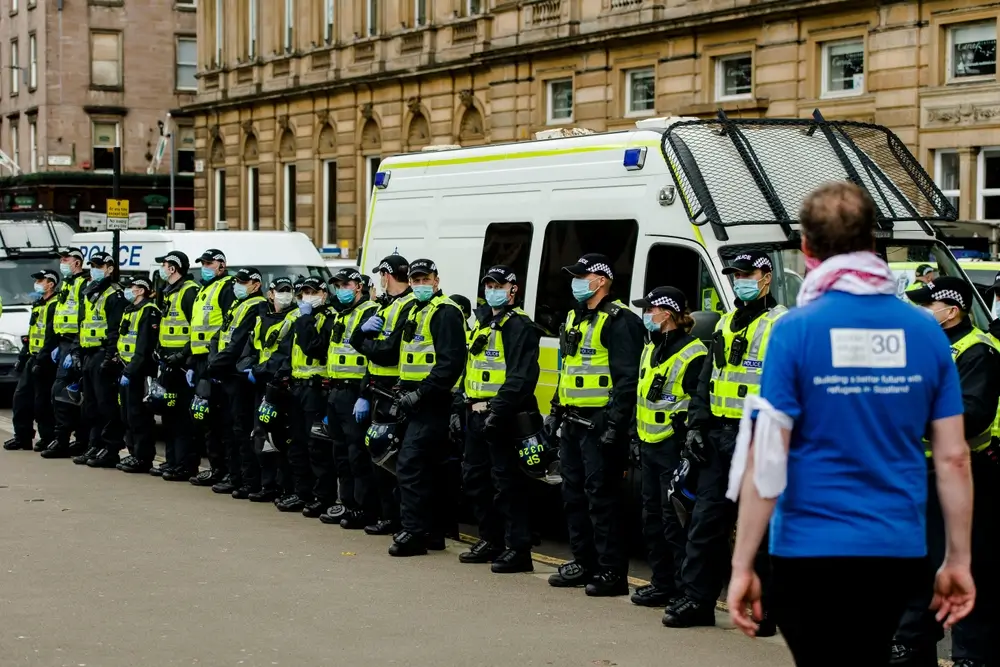
Vacancy listings for Police Scotland separate several distinct entry types, and your preparation should match the one you are using.
Police officer (new recruit). The probationer constable programme is the national route for new officer recruits. This is the application that leads to the PSET, the fitness assessment, the assessment day and a competency-based interview.
Transferee and rejoiner. If you already serve, or have served, as an officer, transferee opportunities are advertised separately from new-recruit campaigns. A transferee or rejoiner application is its own process, so read the specific advert rather than assuming the new-recruit timeline applies.
Special constable. The special constable route is listed as its own vacancy type within the officer family, alongside new recruits, transferees and rejoiners.
Police staff. Civilian posts across the service, advertised role by role, with their own selection process described below.
Custody and security posts appear among the staff and support listings. If your interest is custody work specifically, read the live advert for that post rather than assuming it carries constable powers.
Police staff role families
Police Scotland police staff vacancies cover a wide spread of work. The staff mix includes service advisors and call handlers, custody roles, administration, investigators, analysts, communications, IT, digital, forensic and scientific support, technical support, finance and services, and project management.
Specialist civilian work is a real part of the picture. Recent vacancy snapshots have included user research and design, digital or ICT procurement, IT support and forensic analysis sitting alongside public-facing contact roles.
The practical advice here is simple: read the role profile, not just the job title. A Police Scotland advert sets out the responsibilities, the required evidence and the competency level that will be used. A broad job-board label tells you very little about what the post actually involves day to day.
What Police Scotland call handlers do

The police call handler role is one of the most searched staff jobs, so it is worth describing properly. When you contact Police Scotland by phone or online, your contact goes to one of the national service centres overseen by the Contact, Command and Control Division. Calls are automatically directed to the next available service advisor, and your geographical location has no impact on how quickly the call is answered.
Service advisors are specially trained to risk assess every contact using THRIVE, which identifies Threat, Harm, Risk, Investigative Potential, Vulnerabilities and Engagement opportunities. Every contact through 999, 101 or the online facility goes through that assessment, and the purpose of THRIVE is to make sure each person receives the right response rather than a one-size-fits-all one.
The outcome of a THRIVE assessment can be advice and guidance at first point of contact, deployment through an Area Control Room, a scheduled appointment, or referral to the Resolution Team. The Resolution Team handles non-immediate remote investigation and direct crime recording, which keeps officers free for incidents that need a physical response.
Police Scotland operates three Area Control Rooms covering North, East and West. The Area Control Rooms manage incidents and deploy local policing resources according to priority, so a call handler’s THRIVE assessment feeds directly into what happens on the ground.
The volumes explain why the job is demanding. Police Scotland states that it receives over three million contacts annually, including an average of two thousand 999 emergency calls and over four thousand 101 non-emergency calls daily. Police Scotland also makes clear that it always prioritises 999 emergency calls over 101 calls, which can mean longer waits on 101, and that anyone facing a threat to life, a crime in progress or another serious incident requiring an immediate response should always dial 999.
To become a police call handler you apply to the relevant Police Scotland police staff vacancy and evidence what the advert asks for. The call-handling page explains the work but does not publish a call handler salary, so use the live dated vacancy rather than an average quoted elsewhere.
Current police staff vacancy examples

Vacancy snapshots give you a sense of the breadth of Police Staff work. The table below reproduces a set of Police Scotland listings as captured by UK Careers Fair.
| Job Title | Location | Employment Type | Salary Range | Posted Date |
|---|---|---|---|---|
| HR Programme Tutor | Kincardine | Full Time | £32,000–£40,000 a year | 3 days ago |
| Security and Reception Officer | Glasgow | Full Time | £26,000–£32,000 a year | a week ago |
| Support Officer Resources | Glasgow | Full Time | £32,000–£40,000 a year | a week ago |
| Vetting Officer | Glasgow | Full Time | £26,000–£32,000 a year | a week ago |
| T Learning & Development Coordinator | Gartcosh | Part Time | £50,000–£65,000 a year | a week ago |
| PMO Support Executive | Glasgow | Full Time | £32,000–£40,000 a year | a week ago |
| PMO Analyst | Glasgow | Full Time | £32,000–£40,000 a year | a week ago |
| IT Support Engineer | Dumfries | Full Time | £32,000–£40,000 a year | a week ago |
| Change Manager | Glasgow | Full Time | £50,000–£65,000 a year | 3 weeks ago |
| Change Business Support Manager | Glasgow | Full Time | £45,000–£51,000 a year | 3 weeks ago |
Treat every one of those lines as a snapshot, not a standing offer. Job-board totals are time-bound and often include duplicates across aggregators, so they are not reliable evidence of how many Police Scotland vacancies are open today. Check the Police Scotland jobs hub to confirm what is genuinely live, and set up job alerts if nothing matches right now.
Police staff pay and benefits
Advertised staff salary is role-specific. A Police Scotland User Experience Researcher and Designer vacancy was listed at £39,590 per annum, based in Dalmarnock, Glasgow (G40), requiring user research experience, proficiency with wireframing and prototyping tools and knowledge of accessibility standards. A Procurement Specialist vacancy, also in Glasgow (G40), was listed at £51,637 to £57,707 per annum, supporting estates or digital and ICT procurement and requiring familiarity with Public Contracts Scotland. Both are dated advert figures, not a universal staff pay scale.
Beyond salary, Police Scotland’s staff recruitment page lists the benefits attached to police staff posts:
- 28 days annual leave and six public holidays
- Local Government Pension Scheme for long-term security
- Ongoing training to develop your skills
- Opportunities for career progression and professional growth
- Comprehensive wellbeing support and a dynamic work environment
Do not blend staff pay with officer pay. They are separate employment routes. One Police Scotland police officer listing captured by UK Careers Fair showed £32,000–£40,000 a year with its location given as Various and marked posted a month ago, which makes it a single vacancy snapshot rather than a Glasgow figure or a national average. For current officer pay, the live Police Scotland advert is the only figure worth quoting.
Eligibility checks before you apply
Two eligibility points catch people out, and both are worth checking before you spend time on an application form.
Nationality and immigration status. Police Scotland’s staff eligibility wording requires applicants to be a British citizen, a member of the EU or other states in the EEA, a Commonwealth citizen, or a foreign national free of restrictions.
Continuous UK residence. You should have been resident in the UK for a minimum of three years immediately prior to application. This one is non-negotiable in the published wording, so check your dates carefully if you have lived or worked abroad recently.
For the officer route, possession of a manual driving licence is an eligibility condition. The live Police Scotland officer advert carries the exact wording and any conditions attached to it, so read it there rather than relying on a summary.
On adjustments, Police Scotland is a Disability Confident Committed Employer and guarantees an interview to disabled applicants who meet the essential criteria for a post. Its selection guidance encourages applicants to flag any adjustment they need during recruitment, so support can be arranged through the process rather than scrambled together at the last minute.
How the police staff selection process works
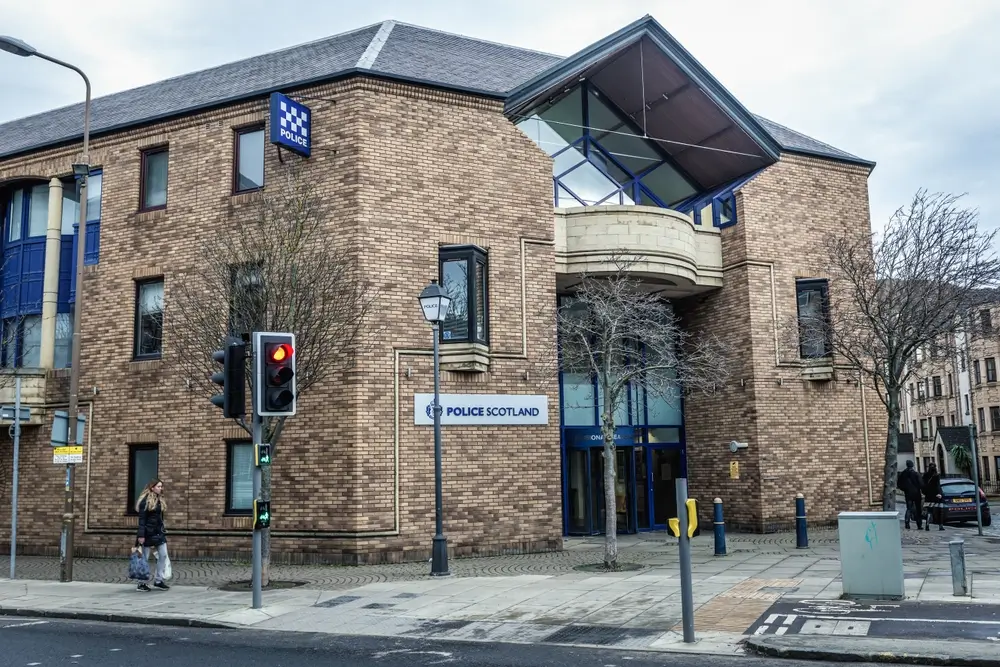
Police staff applications are completed electronically through the Police Scotland e-recruitment system, which you reach from the current vacancies page. Before you start, read the application guidance notes and familiarise yourself with the Competency and Values Framework, the CVF, which is available from the advert. Check the competency level that will be used for selection; it is stated on the advert and role profile.
Applications are then sifted against the criteria set out for the job. Police Scotland describes this as a competitive process in which applications with the strongest evidence are more likely to progress, which is a straight answer to the “is Police Scotland hard to get into” question: your evidence quality decides it. For a few roles, some form of testing is required as part of selection.
Interviews are arranged and carried out by the specific division or department connected with the vacancy. If you are the preferred candidate after interview, you must complete the National Vetting Form for police staff. Full disclosure is essential. Vetting is undertaken by the Vetting Unit and includes financial history checks, and the process can on occasion take up to several weeks.
Once National Vetting is complete, a formal offer of appointment is made. You then complete a confidential health questionnaire, references are taken up, and the start date and induction training are confirmed. In short: sift, testing where required, interview, vetting, health and references, then offer.
Officer applicants: PSET and the full preparation timeline
If you want to be a Police Constable, apply through the Police Scotland police officer application. A police staff job is not a shortcut, and neither is a custody or support post. Match your preparation to the route you are using, whether that is the Probationer Constable Programme as a new recruit, a Transferee or Rejoiner application, or Special Constable entry.
The officer timeline runs from eligibility checks, through the PSET, then the fitness assessment, the assessment day, a competency-based interview and vetting. The Police Staff selection process described above does not substitute for it at any stage.
The PSET is 49 questions in 60 minutes. The thing to understand about preparation is that Police Scotland sets Scottish standards and Scottish law applies, so generic UK-wide practice material can leave gaps in exactly the places that cost marks. Working through Scottish-specific questions under timed conditions tells you two things at once: whether your pace is right, and where your knowledge is thin.
Our guidance is independent and not affiliated with Police Scotland. The most useful next step is simply to sit a full paper under exam conditions and see where you land. Take the free PSET practice paper: https://www.jointhecops.co.uk/free-pset/
How to find, apply for and monitor a vacancy
The Police Scotland staff recruitment page lists current vacancies and explains that each advert contains the role responsibilities, salary and application process. It also offers job alerts, which is the sensible way to track openings if the role you want is not live today.
When you find a match, download the role profile and the CVF guidance from the advert before you write anything. Complete the form in full, provide evidence of relevant experience against the stated competency level, and flag any adjustment you need at that point rather than later.
After submission, expect the process to move in stages, with interviews run by the division or department behind the vacancy. Vetting, the health questionnaire and references all have to be completed before a start date is confirmed, so build that into your planning if you are serving notice elsewhere.
Frequently Asked Questions
How old do you have to be to be a police officer in Scotland, and is 35 or 40 too old to join Police Scotland?
Police Scotland’s published job material does not set out a minimum or maximum age for the officer route, so there is no basis here for saying 35 or 40 is too old. Check the wording on the current Police Scotland officer application and do not import an age rule from another jurisdiction or another force.
What are the different types of Police Scotland jobs?
Vacancies split into police officer routes, including new recruits, transferees, rejoiners and special constables, and police staff. Staff examples include service advisors and call handlers, administration, custody roles, investigators, digital, forensic, IT, communications and technical support. The live advert tells you exactly which route and role you are applying to.
What are the responsibilities of a Police Scotland police officer?
Officer opportunities span constable work, community and response policing, and specialist roles, but a complete duty list is not published across general job listings. Use the current Police Scotland officer advert or role profile for responsibilities, and keep that separate from civilian staff duties.
How much do Scottish police earn, and how much does an officer make in Glasgow?
There is no single blended figure, because staff and officers are different employment routes and staff pay is vacancy-specific. One Police Scotland officer listing on UK Careers Fair showed £32,000–£40,000 a year, posted a month ago, with its location given as Various rather than Glasgow, so it supports neither a Glasgow figure nor a national average. Use the live Police Scotland advert for current pay.
Are Police Scotland recruiting now, and are they struggling to recruit?
The Police Scotland staff recruitment page directs candidates to current vacancies and job alerts, and external vacancy snapshots show openings changing over time. Those listings do not establish a recruitment shortage or a success rate, so check the Police Scotland jobs hub rather than relying on claims about recruitment difficulty.
Are there civilian jobs in Police Scotland, and can you work for the police without being an officer?
Yes. Police Scotland advertises Police Staff roles including service advisors, call handlers, administration, custody, investigators, digital and forensic work, all distinct from officer posts. Remember that a staff job is not a route to becoming a constable; apply through the separate police officer application if that is your aim.
What are the core values of Police Scotland, and what is the role of the police in Scotland?
Police Scotland’s staff recruitment material names integrity, fairness, respect and a commitment to upholding human rights as its shared values. Its stated purpose is to improve the safety and wellbeing of people, places and communities in Scotland, which is the context to use rather than another force’s framework.
What can you specialise in in Police Scotland?
Officer opportunities point towards community and response policing, roads policing, firearms, cyber crime, marine and air support. Staff specialisms include digital, IT, analysis, forensic, scientific and technical work. Treat these as examples of routes and vacancies, not a guarantee that every specialism is open at any given time.
How do you become a Police Scotland call handler, and what do call handlers earn?
Apply to the relevant Police Scotland Police Staff vacancy and evidence exactly what the advert asks for. Selection can include a sift, testing, an interview, National Vetting, a health review and references. The call-handling page explains the work and the THRIVE model but publishes no call handler salary, so use the dated live vacancy instead of an unsupported average.
Is Police Scotland hard to get into?
For police staff, Police Scotland describes a competitive sift in which the applications with the strongest evidence are more likely to progress, with testing and an interview for some roles. For officers, work from the current officer recruitment requirements and prepare for the Scottish-specific stages rather than treating a civilian application as a shortcut.
Sources
Realistic mock exams in Language, Numeracy and Information Handling with complete explanations.
Police Officer in Scotland: The Police Constable Role Explained
Police Scotland Jobs: Routes, Pay and How to Apply in 2026