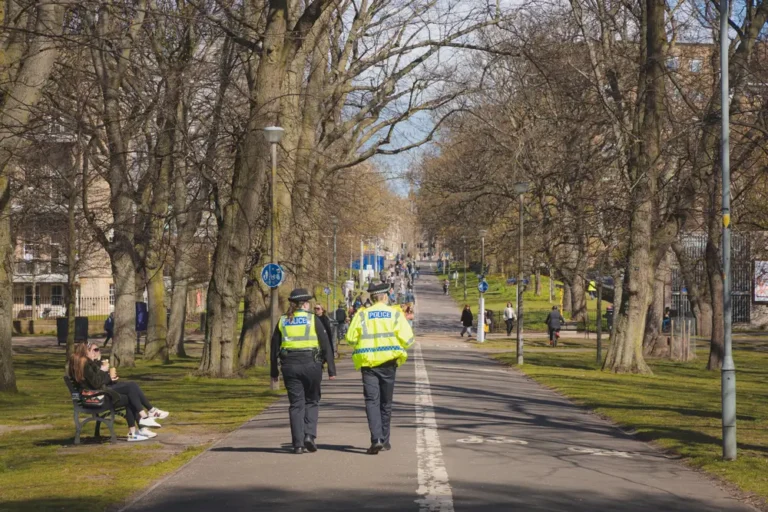
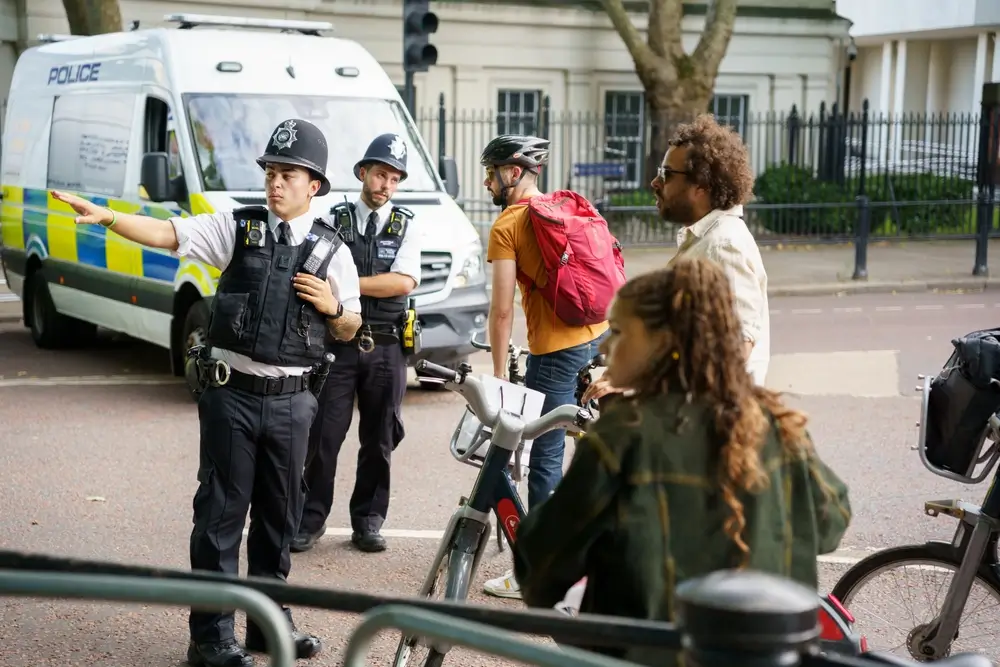
A Special Constable is a trained volunteer police officer who works alongside full-time officers and holds the same powers while on duty. Police Scotland sets a minimum commitment of 96 hours a year, which is why the role attracts so many people in full-time work, study or caring roles.
The selection standards are not a lighter version of the regular route. You still sit an entrance test, pass a fitness assessment, face an interview and go through vetting, medical screening and substance-misuse screening. This guide sets out the role, the eligibility criteria, the recruitment process and the legal framework behind it, so you know exactly what you are applying for.
What a Police Scotland Special Constable actually is
Police Scotland describes Special Constables as trained volunteer police officers who work alongside full-time officers to keep local communities safe. While you are serving, you have the same powers and responsibilities as your full-time colleagues. The difference is your status: you volunteer your time rather than hold a salaried post.
The Special Constabulary is a part-time volunteer body with a long history in Scotland. Police Scotland presents the role as flexible by design, built to fit around work, family life and studies. That flexibility is the point. You can hold a full-time job and still meet the 96-hour annual minimum.
Specials also act as a bridge between the public and the service. You bring knowledge of your own area, your working life and your community contacts into policing, which is harder to replicate through recruitment alone.
“Members of the special constabulary provide a vital link between policing and the public; by volunteering, individuals epitomise public-spiritedness and I know that our special constables take great pride in what they do.” — Phil Gormley, Police Scotland Chief Constable
What you do on duty
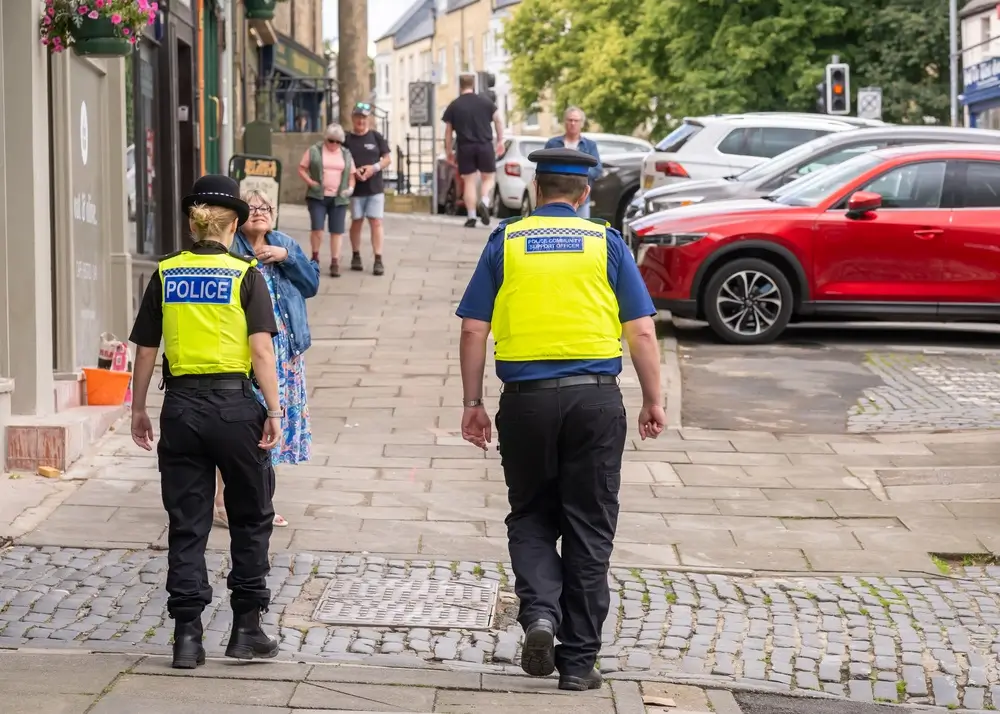
Police Scotland lists neighbourhood patrols, crime prevention, policing major events, building relationships in your community and interacting with diverse groups among the core activities of the role.
Operational duties go wider than patrol. Published role material for volunteer police officers includes providing an initial response to victims and witnesses, carrying out high-visibility patrols to deter crime and anti-social behaviour, making arrests, gathering intelligence on issues such as drug dealing, educating businesses on crime prevention, assisting at collisions and fires, enforcing road-safety initiatives and supporting regular officers at major incidents.
You are not left to work these duties out alone. Specials build towards performing operational duties independently, but keep access to support and supervision throughout. Over time, some volunteer police officers move into specialist areas such as roads policing, investigations or licensing enforcement, although those opportunities vary between forces.
Eligibility criteria: age, residence and nationality
Police Scotland’s published eligibility criteria say you can apply if you are 18 or over, are physically fit, have lived in the UK for at least three years, meet the national eyesight standard and meet its residency requirements. The minimum age of 18 is also set out in the Police Service of Scotland (Special Constables) Regulations 2013.
The three-year residence must be continuous and fall immediately before your application, so that every candidate can be vetted on an equal basis. A gap year or an extended holiday abroad of roughly 12 months or under is generally treated as maintained UK residency.
On nationality, you must be a British citizen, an EU or EEA national, a Commonwealth citizen, or a foreign national with no restrictions on your stay in the UK. If you are not a British citizen, you will be asked to prove during the recruitment process that you have no restrictions on your stay and the right to work here. The 2013 Regulations also require non-UK and non-EEA nationals to hold indefinite leave to remain.
Police Scotland does not publish an upper age limit for the role. West Yorkshire Police, which runs its own Special Constabulary, states explicitly that there is no upper age limit for Specials.
Fitness, eyesight and medical standards
Regulation 5 of the 2013 Regulations sets the qualifications for appointment: satisfactory references, a minimum age of 18, and physical and mental fitness assessed by an approved registered medical practitioner. You must meet the determined standards for eyesight and hearing, show a sufficient level of education including competence in English and numeracy, and disclose your current and previous employment history.
In practice that means two separate checks on health. The national eyesight standard is an eligibility condition stated up front by Police Scotland, while medical screening later in the recruitment process confirms you are fit for operational duties.
Police Scotland describes itself as a Disability Confident employer, committed to equal opportunities for people with disabilities and for those living with a neurodiverse condition such as dyslexia or ADHD.
Do you need a driving licence?
Police Scotland’s Special Constable page states that you do not need a driving licence to become a Special Constable. That is different from the regular officer route, where the Police Scotland careers page requires a manual driving licence.
Wording can vary between individual vacancies, and some posts may ask for a licence, so read the live advert for the intake you are applying to rather than assuming. Note also that holding a licence does not automatically mean you will drive police vehicles: driving duties depend on force policy and separate training, not on your licence alone.
Occupations and business interests that rule you out
Police Scotland excludes some applicants because of a conflict of interest with policing. The published list covers roles in fire services, security, private investigation, managing or working in licensed premises or betting shops, and service members of HM Forces.
Business interests are handled separately and strictly. Under the 2013 Regulations, a Special Constable needs the Chief Constable’s consent for a business interest, and anyone applying for the role or already serving must give written notice of existing or prospective business interests to the Chief Constable. The definition is broad: it includes holding liquor, betting, gaming or entertainment licences and certain occupations, and it extends to the interests of family members and cohabitants. If you are unsure whether something counts, declare it.
Schedule 1 of the same Regulations restricts private life where it touches impartiality. You must avoid any activity likely to interfere with the impartial discharge of your duties, or likely to give the public that impression. Active participation in politics is prohibited, as is wilfully refusing or neglecting to discharge a lawful debt. Regulation 3 makes clear that no other restrictions beyond those needed for the proper functioning of the role can be imposed by the Chief Constable on a Special Constable’s private life.
The 96-hour commitment and Employer Supported Policing
The minimum is 96 hours a year, confirmed both on the Police Scotland role page and in Police Scotland FOI disclosure 26-2182 of 11 September 2026. Spread across a year, that is a few hours most weeks, which is why the role sits alongside full-time employment for many volunteers.
Employer Supported Policing, a scheme through which employers back staff who serve, can make this easier. Police Scotland states that if your employer is part of Employer Supported Policing, you may get time off to train and serve as a Special Constable. It is worth asking your HR team early, because Employer Supported Policing arrangements affect how you schedule training blocks as well as shifts.
The role is voluntary rather than salaried. Police Scotland provides the training, uniform and equipment you need; for anything relating to expenses, rely on the current terms published with the vacancy rather than figures quoted elsewhere.
The recruitment process stage by stage

Police Scotland splits the application process into clear stages: submit the application form, standard entrance test, fitness assessment, interview, vetting, medical screening and substance-misuse screening. Before any of that, you create an account and register on the Police Scotland job portal, then complete the application form. Police Scotland also runs candidate briefing sessions and recruitment events across the country for people who are eligible and interested.
The standard entrance test is the PSET, the Police Scotland Entrance Test: 49 questions in 60 minutes. Preparation matters here because the time pressure, not the difficulty of any single question, is what catches people out.
The fitness test is Police Scotland’s multi-stage shuttle run. Police Scotland’s recruitment-process page sets the standard at level 5.4 on a 15-metre track. Train for the bleep test well in advance: it is a pass-or-fail standard, and the turns on a 15-metre track cost more than people expect.
Vetting is where undeclared history causes problems. Police Scotland’s published criteria state that defaulted accounts totalling £1,000 or more lead to rejection, as do more than 6 points on a driving licence. Disclose everything accurately at application stage.
Training, attestation, uniform and equipment
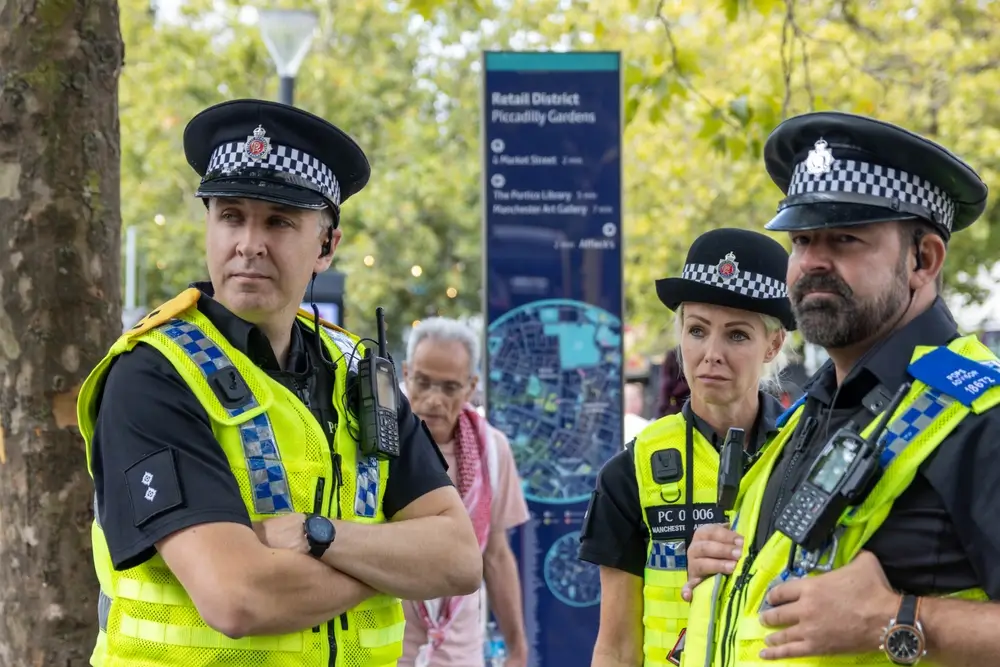
Police Scotland trains Special Constables and issues the uniform and equipment required for the role. Specials wear the same uniform and carry the same personal protective equipment as regular officers, which is part of why the public rarely distinguishes between the two on the street.
Attestation is the formal moment you are sworn in as a constable and issued with your warrant card. From that point you hold police powers, and your warrant card is the proof of them. You then build experience under supervision, working towards handling operational duties independently.
One point worth knowing: ranks within the Special Constabulary have no basis in law, and a higher rank does not confer additional police powers. Rank insignia and collar numbers differ from one constabulary to another, so a title seen in another force does not translate into extra authority.
Legal framework, records and conduct
The Police Service of Scotland (Special Constables) Regulations 2013, which came into force on 1 April 2013, govern appointment, conduct, records and discipline for Specials in Scotland.
On appointment you must provide fingerprints and a sample. That biometric data is kept separately from criminal justice samples and must be destroyed when you leave the service.
The Chief Constable keeps a personal record for every Special Constable. It holds your home address and contact number, a photograph no older than 10 years, a personal description, date and place of birth, next of kin details, and your service history, including postings, training, injuries, commendations and any punishments. You have the right to inspect your own personal record, and it is destroyed when you cease to be a Special Constable.
Conduct is handled through a formal misconduct process. The Regulations provide for designated officers, a preliminary procedure, an inquiry and potential disciplinary action. An inquiry officer examines the allegation, and decisions taken by a misconduct officer or by the Chief Constable set the relevant date from which disciplinary entries can later be expunged after a period of good conduct. In short, the inquiry officer investigates and the misconduct officer decides, with the same professional standards applied as for regular officers.
Why people join and what you take away
Motivations vary. Some want to give something back to their community, others want to broaden their skills and life experience, and many want to see policing from the inside before deciding on a regular career. There is a separate route for serving Specials who later apply to become full-time officers, with its own requirements.
The skills are genuinely transferable: communication under pressure, analysing information quickly, critical thinking and problem solving, applying the law safely and legally, lifesaving first aid, personal safety and teamwork.
“I’ve gained transferable skills to take back into the workforce and develop my skills within Openreach – team working, conflict resolution, life skills and physical activity carried out by special constables on duty.” — Ricky Drummond, Openreach engineering manager and Special Constable
Your next step
Check the eligibility criteria honestly first: age, three years’ continuous UK residence, the residency requirements, the national eyesight standard, fitness, and any occupation or business interest that could create a conflict of interest. If all of that is clear, register on the Police Scotland job portal and start preparing for the entrance test, because it is the first real filter in the recruitment process.
The most useful thing you can do this week is sit a timed paper under exam conditions. Take the free PSET practice paper here: https://www.jointhecops.co.uk/free-pset/
Frequently Asked Questions
What are the key differences between a Police Scotland Special Constable and a regular police officer?
A Special Constable is a trained volunteer police officer; a regular officer serves full time on a salary. Police Scotland states that Specials hold the same powers and responsibilities as their full-time colleagues while serving. For comparison, Police Scotland lists a salary range of £31,466.00 – £50,528.00 for regular officers, with a two-year probationary period.
Do Special Constables have police powers?
Yes. Police Scotland is explicit that Special Constables have the same powers and responsibilities as full-time colleagues. Those powers come from attestation as a constable in Scotland, so apply the Scottish framework rather than rules from another force or jurisdiction.
What does a Police Scotland Special Constable do?
Neighbourhood patrols, crime prevention, policing major events and community engagement form the core. Published role material also includes initial response to victims and witnesses, intelligence gathering, assisting at collisions and fires, road-safety enforcement and supporting regular officers at major incidents.
What do you need to become a Police Scotland Special Constable?
You must be at least 18, have lived in the UK for at least three years immediately before applying, meet Police Scotland’s residency requirements, be physically fit and meet the national eyesight standard. Police Scotland also checks that your nationality, right to stay, and any occupation or business interest are compatible with appointment.
Who cannot be a Police Scotland Special Constable?
Police Scotland rules out applicants in fire services, security, private investigation, managing or working in licensed premises or betting shops, and serving members of HM Forces, because of the conflict of interest involved. Business interests need the Chief Constable’s consent, so declare any current or prospective interest rather than assuming it is acceptable.
How do you become a Special Constable in Police Scotland?
Register on the Police Scotland job portal and submit the application form. The published stages are then the standard entrance test, fitness assessment, interview, vetting, medical screening and substance-misuse screening. The entrance test is the PSET: 49 questions in 60 minutes.
How many hours must a Police Scotland Special Constable volunteer?
A minimum of 96 hours a year, as stated on the Police Scotland role page and confirmed in FOI disclosure 26-2182 of 11 September 2026. That annual figure applies in Scotland; monthly minimums quoted by forces in England are different requirements.
Do Special Constables get paid?
No. The role is voluntary rather than a salaried post. Police Scotland provides training, uniform and equipment, and any expense arrangements are set out in the current official terms attached to the vacancy.
Do Special Constables need a driving licence?
Police Scotland’s Special Constable page says a driving licence is not required for the role, unlike the regular officer route, which requires a manual licence. Wording can differ by vacancy, so check the live advert. Holding a licence does not in itself mean you will drive police vehicles.
Is being a Police Scotland Special Constable worth it?
That depends on the time you can give and why you are applying. People join to serve their community, learn new skills, gain life experience and see policing from the inside. The role develops communication, critical thinking, legal understanding, first aid, personal safety and teamwork, all of which transfer back into your main career.
Sources
Realistic mock exams in Language, Numeracy and Information Handling with complete explanations.
Police Officer in Scotland: The Police Constable Role Explained
Scotland Police Jobs: Officer and Police Staff Routes Explained