
Police Scotland’s eligibility list for regular police officers includes one line that stops a lot of applications before they start: you must hold a manual driving licence. It sits alongside age, residency, right to work, fitness and eyesight, and it applies at the point of application, not later in training.
This guide sets out exactly what that requirement covers, how your driving record is assessed, where the Special Constable route differs, and what happens after you clear the eligibility stage.
Do you need a driving licence to join the police in Scotland?
For the regular constable route, yes. Police Scotland’s officer recruitment page states that you can apply if you are 18 or over, are physically fit, have lived in the UK for at least three years, meet the right to work requirements, hold a manual driving license and meet the national eyesight standard. The licence is not a preference or a nice-to-have, it is listed as an eligibility condition.
Put another way: can you join the police without a driving licence, and can you become a police officer without a driver’s license? Not as a regular Police Scotland officer under the published criteria. So if you need a drivers license to join the police in Scotland, the honest answer is that you need to sort it out before you apply rather than hope for flexibility later.
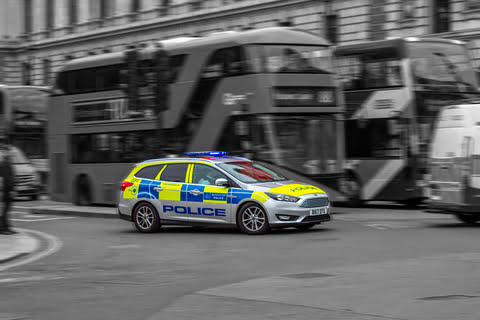
There is one clear exception. Police Scotland states that you do not need a driving licence to become a Special Constable. So if you are wondering, do I need to drive to join the scheme as a volunteer, the answer there is no, although the Special Constable route carries its own eligibility conditions and a minimum annual commitment.
What the Police Scotland driving-licence requirement actually covers
Do you need a manual license to be a police officer in Scotland? The eligibility wording specifically says manual driving license. It does not say that an automatic-only entitlement satisfies the condition, so treat a full UK driving licence with manual entitlement as the standard to aim for.
The requirement is operational rather than administrative. Police Scotland expects officers to be able to drive police vehicles in different conditions, and its recruitment information refers to DVLA Group 2 medical driving-licence standards. That group 2 medical benchmark is stricter than the everyday car standard, which is why eyesight sits right next to the licence on the same eligibility list.
Most of your probation will be spent in response policing, which means driving to incidents at pace, often at night and in poor weather. A full UK driving licence with manual entitlement, plus the national eyesight standard, is what makes that possible from day one.
How to get a car licence in Scotland before you apply
Plenty of people land on this subject asking how to get a car license rather than how to join. Police Scotland sets the condition, not the process: its recruitment pages require a manual driving licence and the national eyesight standard, and they do not explain how to get a driving license. The licensing side, including provisional entitlement and the driving test in Scotland, sits with the DVLA, so check current DVLA guidance for the steps and timescales.
Sequencing matters. If you are applying for a driving license and planning a police application at the same time, finish the licence first. Nothing in Police Scotland’s published eligibility wording offers a grace period that lets a regular officer applicant apply now and gain manual entitlement later, so apply for a driving license early and give yourself room for lessons, a theory pass and a test date.
One related question comes up often: do you need a driving license to buy a car? Vehicle ownership is a separate consumer matter and Police Scotland’s recruitment rules say nothing about owning a car. What they do require is that you hold the licence itself.
Driving points and other reasons an application can be rejected
Holding a licence is not enough on its own, because your driving record is also assessed. Police Scotland’s published rejection guidance states that your application will be rejected if you have more than 6 points on your driving licence. The wording is precise: more than 6 points, not six or more, so a licence carrying exactly six points is not automatically caught by that line.
That guidance states the threshold but does not list which endorsements carry which penalty points, so check your own record through the DVLA before you apply. It is a five-minute job that tells you where you stand.
Other listed grounds for rejection are broader. You will be rejected if you have been convicted of, or are under investigation for, serious offences including murder, culpable homicide, manslaughter, causing death by driving, attempted murder, serious assault, kidnapping, human trafficking, treason and espionage. Being a registered sex offender, or subject to a Sexual Offences Prevention Order or Sexual Harm Prevention Order, also leads to rejection.
Financial checks apply too. Police Scotland lists rejection where you are currently in a Trust Deed or less than 12 months have passed since discharge, where you have been sequestrated or declared bankrupt and less than three years have passed, or where you have defaulted accounts totalling £1,000 or more.
Police Scotland eligibility checklist before you apply
The full published list for regular officers is short, and every line is a hard filter:
- 18 or over at the point of application
- physically fit
- at least three years of continuous UK residence before applying
- meets the right to work requirements
- holds a manual driving licence
- meets the national eyesight standard
Police Scotland states that officer eligibility is governed under the Police Service of Scotland Regulations 2013. Applicants who are not UK or EEA nationals must hold indefinite leave to remain or equivalent status at the point of application, and a time-limited visa does not meet that legal requirement even where it currently provides a right to work.
Do you need a degree to join the police in Scotland? No. Police Scotland says no formal qualifications are required to apply, and that what counts is the relevant life skills you already have, the values you hold and how you treat others. Resilience is singled out as one of the main traits looked for in candidates.
How to become a police officer in Scotland: the stages after your application
You apply through the Police Scotland jobs portal by creating an account, registering and completing the application form. The process runs at your own pace, you manage it online, and you can check your status by logging in. If you fail pre-screening, Police Scotland says you can reapply once you meet the criteria. If you want the wider picture of the whole route, see our overview of how to join Police Scotland.
PSET: the Police Scotland Entrance Test
The PSET, or Police Scotland Entrance Test, assesses your understanding of language, information handling and numeracy. It consists of 49 questions in 60 minutes, which is why pacing matters as much as accuracy. Police Scotland publishes example PSET questions and answers and says it does not endorse any study materials.
The multi-stage fitness test
The fitness stage is a multi-stage fitness test, better known as the bleep test. You run up and down a 15-metre track in time with audio beeps, and the gap between beeps shortens at the end of each level. The pass standard is level 5.4, which means running in time with the beeps for four lengths at level 5. The purpose is to confirm you are fit for the job and ready for Officer Safety Training.
Timing has a rule of its own: the fitness test must be completed within six months of being given a start date. Exceed that window and you will need to sit another one, and further tests may be requested during recruitment.
Assessment day: group task and situational judgement exercise
At the assessment centre, every exercise is scored against the Police Scotland Competencies and Values Framework, usually shortened to CVF, and none of them require prior policing knowledge. The group task runs for 50 minutes in total: 10 minutes of independent reading of a policing scenario of roughly 500 to 600 words, a 30-minute group discussion and briefing, then a 10-minute assessor Q&A.
The situational judgement exercise lasts 60 minutes. Assessors present unfolding hypothetical policing scenarios verbally, and you are asked individually about your considerations and intended course of action. There is no preparation time, so your reasoning has to be clear out loud.
Competency-based interview, medical and vetting
Candidates who succeed at the group task and the situational judgement exercise move to a 20-minute competency-based interview with four questions, each aligned to a CVF competency. A medical examination also forms part of the process.
Vetting checks are carried out once you have successfully completed the application process, and everything you declared is confirmed at that stage. You are asked to declare criminal convictions and tattoos, with each case considered on its own merits. The Police Scotland Force Vetting Unit may occasionally make an early assessment of vetting suitability on a case-by-case basis, so accuracy from the first form onwards protects you later.
Special Constable route: no driving licence required
Special Constables are trained volunteer police officers who work alongside full-time colleagues, with the same powers and responsibilities. The eligibility conditions are that you are 18 or over, physically fit, have lived in the UK for at least three years, meet the national eyesight standard and meet the residency requirements. A driving licence is not on that list.
Police Scotland’s residency requirements for the Special Constable route ask that you are a British citizen, an EU or EEA national, a Commonwealth citizen, or a foreign national with no restrictions on your stay in the UK. The commitment is a minimum of 96 volunteer hours a year, and if your employer takes part in Employer Supported Policing you may get time off to train and serve.
Some occupations create a conflict of interest. People working in fire services, security, private investigation, licensed premises or betting shops, and members of HM forces, may be unable to apply as a Special Constable for that reason.
Training, probation and pay once you are in
Police Scotland’s current recruitment information states that initial officer training has been extended to 18 weeks: one week at a regional training centre, 15 weeks at either the Scottish Police College or the Training and Recruitment Centre at East Kilbride, then a further two weeks at a regional training centre.
After that comes a two-year probationary period, spent mainly in response policing while you complete training and operational duties. Once the probationary period is finished, you can move towards specialist roles and training such as public order, intelligence, armed policing, negotiation, wildlife crime, detective work, cybercrime, road policing, counter-terrorism and child protection.
On pay, Police Scotland lists a starting salary of £34,001 for a new constable, with annual increments over 11 years taking it up to £54,597.
Your next step
If you already hold a manual licence and your record is clean, the eligibility question is settled and your attention should shift to the first real hurdle: the PSET. It is a mandatory gateway stage in the recruitment process, and it rewards timed practice rather than general revision.
Sit a realistic practice paper under exam conditions before you book the real thing. You can take a free PSET practice test here: https://www.jointhecops.co.uk/free-pset/
Frequently Asked Questions
What do I need to become a police officer in Scotland?
For a regular Police Scotland officer application you must be at least 18, have lived in the UK continuously for at least three years, meet the right to work and national eyesight standard requirements, be physically fit and hold a manual driving licence. No formal qualifications are needed, but you must pass the PSET and then the fitness, assessment, interview and vetting stages.
What are the requirements to join Police Scotland?
Police Scotland lists being 18 or over, physical fitness, three years of continuous UK residence, the relevant right to work, a manual driving licence and the national eyesight standard. Applicants who are not UK or EEA nationals must hold indefinite leave to remain or equivalent status at the point of application, and time-limited visas are not accepted.
Can I join the police in Scotland without a driving licence?
Not as a regular officer, because the official eligibility list requires a manual driving licence. The Special Constable route is different: Police Scotland states that no driving licence is needed, though that route has its own eligibility conditions and a minimum of 96 volunteer hours a year.
Do I need a manual licence for Police Scotland?
Yes. The regular officer eligibility list specifically says applicants must hold a manual driving license. It sits alongside the national eyesight standard, and Police Scotland refers to the standards needed to drive police vehicles in different conditions.
How can I get a driving licence in Scotland before applying to Police Scotland?
Police Scotland’s recruitment pages do not explain the DVLA steps for getting a licence. They set the recruitment condition only: a regular officer applicant must hold a manual driving licence and meet the national eyesight standard. For the licensing process itself, check current DVLA guidance.
How do driving-licence points affect a Police Scotland application?
Your driving record can end an application. Police Scotland’s rejection guidance states that an application will be rejected where the applicant has more than 6 points on their driving licence, so a record above that threshold is an automatic bar rather than a judgement call.
What do the PSET and Police Scotland fitness test involve?
The PSET assesses understanding of language, information handling and numeracy, and consists of 49 questions in 60 minutes. The fitness stage is a 15-metre multi-stage bleep test with a pass standard of level 5.4, meaning four lengths at level 5 in time with the beeps.
How hard is it to get into Police Scotland?
Police Scotland does not publish a difficulty score or pass rate for its selection process. What is published is the sequence: PSET, fitness assessment, assessment-day exercises, competency-based interview and vetting. Preparing stage by stage is more useful than guessing at odds.
How much does a police officer earn in Scotland?
Police Scotland’s recruitment page lists a starting salary of £34,001 for a new officer, rising through annual increments over 11 years to £54,597. Check the current recruitment page before you apply, as pay scales are reviewed.
Do I need a degree or formal qualifications to join Police Scotland?
No. Police Scotland states that no formal qualifications are required to apply, and that relevant life skills, values and how you treat others carry the weight. Your suitability is tested through the PSET and the later recruitment stages instead.
Sources
Realistic mock exams in Language, Numeracy and Information Handling with complete explanations.
Police Scotland Intake Dates 2026: Months, Numbers and Timing
Apply for Police Scotland: Eligibility, PSET and Process